

Hormones and bladder health are closely connected, especially during menopause and other times of hormonal change.
Have you noticed that your bladder seems to have changed around menopause, or wondered whether hormones might be playing a role?
You’re not alone. Many women experience new urinary symptoms such as urgency, frequent trips to the bathroom, nighttime urination, or bladder leaks during times of hormonal change. It’s natural to ask whether estrogen, testosterone, or other hormones could be contributing.
The answer is more nuanced than a simple yes or no.
Hormones can influence the tissues, nerves, and muscles that support bladder function, but they’re only one part of a much larger picture. Factors like pelvic floor strength, aging, pregnancy, childbirth, lifestyle habits, and certain medical conditions can also affect bladder health.
In this guide, we’ll walk through what researchers know, and what they don’t, about hormones and the bladder. You’ll learn how estrogen, testosterone, and DHEA may affect urinary symptoms, which hormone therapies have the strongest evidence behind them, and when it’s worth discussing treatment options with your healthcare provider.
How Hormones Affect the Bladder
| Hormone | Primary Effect on the Bladder |
|---|
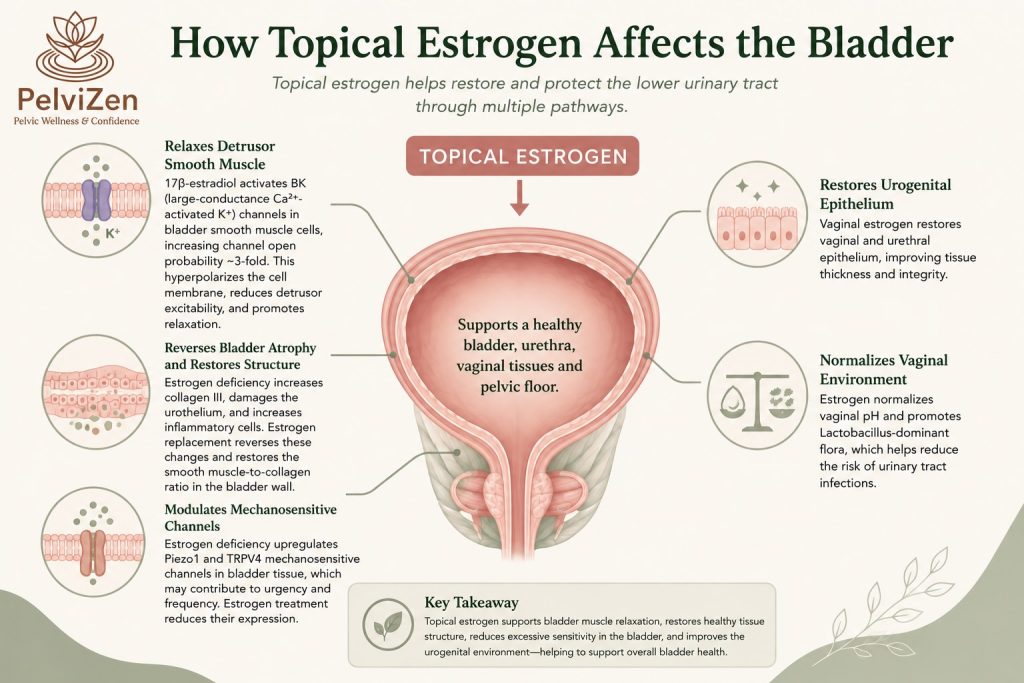
| Estrogen | Maintains healthy bladder and urethral tissues, supports bladder relaxation, and improves the urogenital environment. |
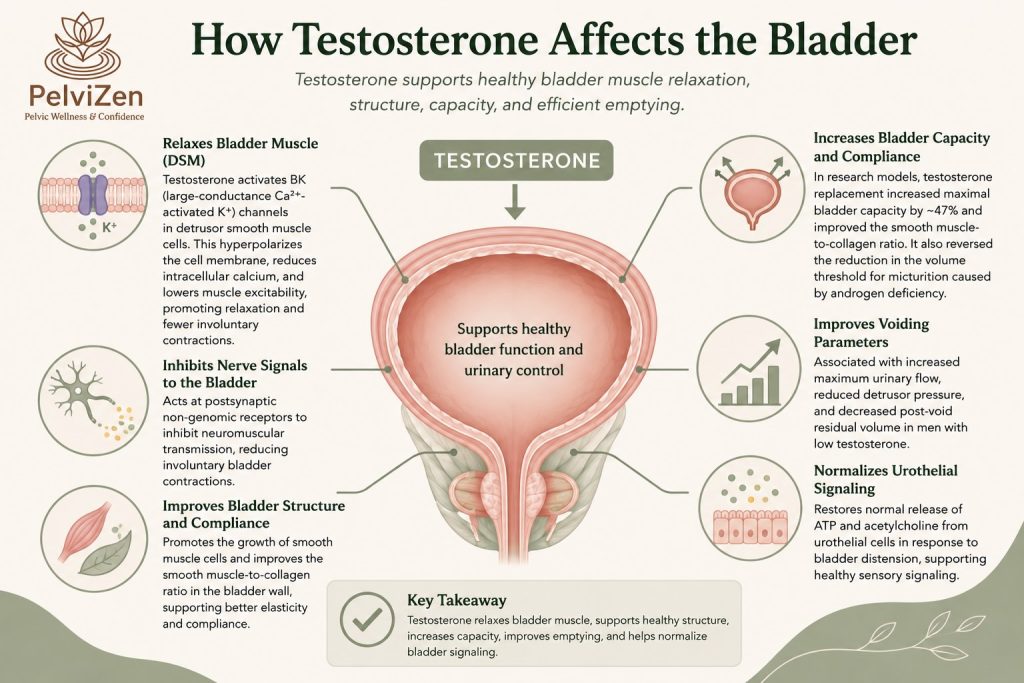
| Testosterone | Relaxes bladder muscle, supports bladder structure, and may improve bladder capacity and emptying. |
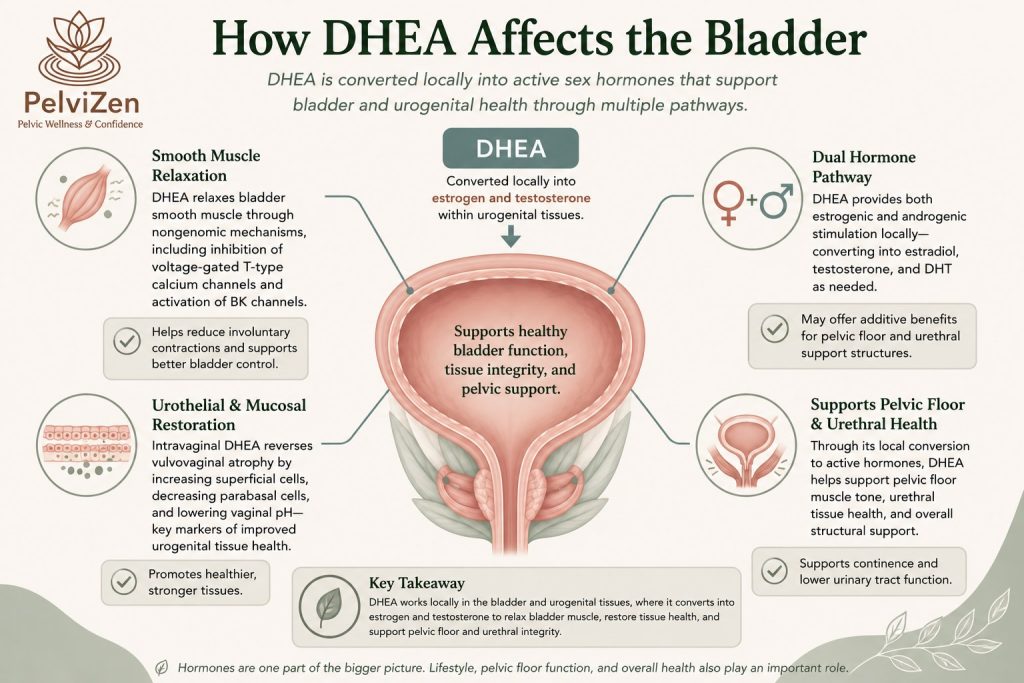
| DHEA | Acts as a local precursor to both estrogen and testosterone, supporting tissue health through both pathways. |
It’s important to remember: Hormones are only one factor that affects bladder health. Pelvic floor muscle function, aging, pregnancy, childbirth, neurologic conditions, lifestyle habits, and other medical conditions all play important roles. Hormone therapy may be helpful for some women, but the evidence varies depending on the specific hormone, the symptoms being treated, and the individual.
Not Sure What to Try Next?
Understanding why you’re waking up at night is the first step—but knowing what to do next can still feel overwhelming.
The PelviZen Marketplace helps you compare physician-reviewed pelvic health products, bladder support devices, pelvic floor trainers, leak protection products, coaching programs, and lifestyle interventions in one place.
✓ Browse by symptom
✓ Compare evidence
✓ Understand typical costs
✓ Find products matched to your goals
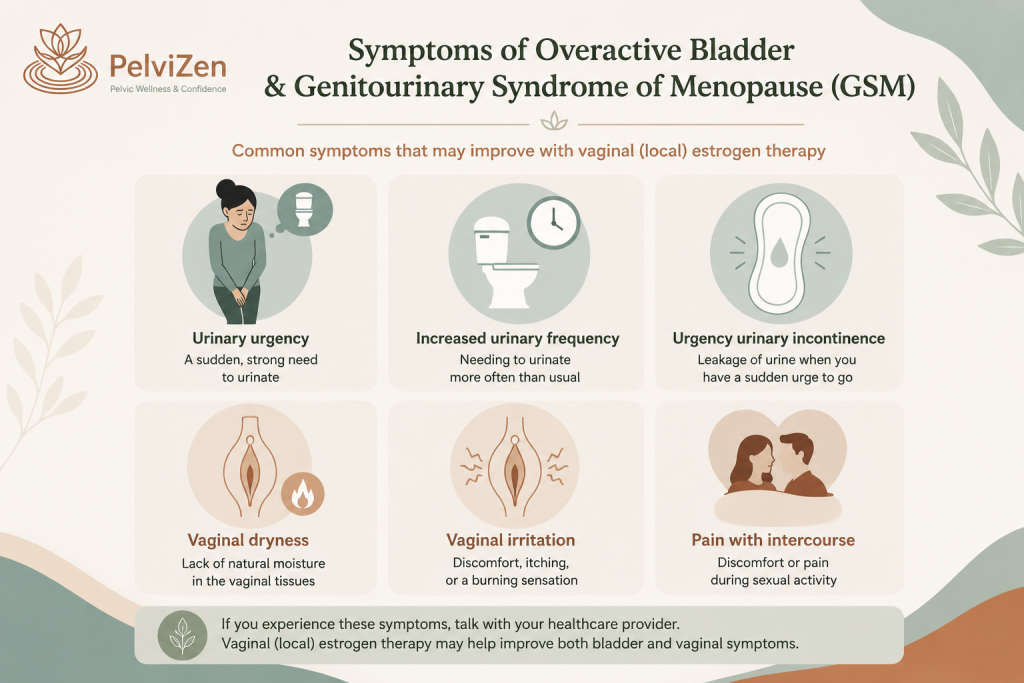
Symptoms Hormones Can Cause
Estrogen and Bladder Health
Testosterone
DHEA
Local vs Systemic Hormones
Local (Topical) Therapy
Local therapies are applied directly to the vaginal or vulvar tissues as a:
- Vaginal cream
- Vaginal tablet
- Vaginal insert
- Vaginal ring
Because these treatments are delivered close to the bladder and urethra, they primarily affect nearby tissues while producing very little absorption into the bloodstream.
Potential local benefits include:
- Restoring healthy bladder and urethral tissues
- Improving tissue thickness and elasticity
- Relaxing bladder smooth muscle
- Supporting pelvic floor and urethral function
- Improving the vaginal microbiome and reducing recurrent urinary tract infections
Systemic Therapy
Systemic therapies circulate throughout the entire body after being taken as:
- Oral tablets
- Transdermal patches
- Gels
- Sprays
- Injections
- Pellets (depending on the hormone)
These treatments are designed to address whole-body hormone deficiency, including symptoms such as:
- Hot flashes
- Night sweats
- Sleep disturbances
- Mood changes
- Bone health
Although systemic hormones also reach the bladder, their effects on urinary symptoms differ depending on the hormone and the condition being treated.
The Bottom Line
For women whose primary concern is bladder health, local hormone therapy generally has the strongest evidence, particularly vaginal estrogen for postmenopausal urinary symptoms and genitourinary syndrome of menopause (GSM).
Systemic hormone therapy is usually prescribed to treat broader menopausal symptoms rather than bladder symptoms alone. Testosterone and DHEA remain promising areas of research, but their role in bladder health is still being defined.
Hormones for Stress Urinary Incontinence
Hormones for Overactive Bladder
Are Hormones Safe?
When bladder symptoms are related to menopause or genitourinary syndrome of menopause (GSM), localized therapies generally have the strongest safety profile because they act primarily where they are applied and result in much lower systemic hormone exposure.
- Vaginal estrogen has the most robust long-term safety data and is the best-studied option.
- Vaginal DHEA also has a favorable safety profile with minimal systemic absorption, though it has less long-term evidence.
- Testosterone therapy may benefit carefully selected women, but it remains off-label in the U.S., and long-term safety beyond two years is still uncertain.
Frequently Asked Questions
Does estrogen help bladder leaks?
It depends on the type of bladder leak. Low-dose vaginal estrogen can improve urinary urgency, frequency, and symptoms related to genitourinary syndrome of menopause (GSM), but systemic estrogen has not been shown to improve stress urinary incontinence and may actually worsen it.
Can testosterone help urinary incontinence?
Possibly, but the evidence is still emerging. Early research suggests testosterone may improve bladder muscle relaxation, bladder capacity, and urinary function, but there is not yet enough high-quality evidence to recommend it as a standard treatment for urinary incontinence in women.
Is vaginal estrogen safe?
For most postmenopausal women, low-dose vaginal estrogen has an excellent safety profile and is recommended by major medical organizations for GSM. It has minimal systemic absorption, generally does not require progesterone, and routine endometrial monitoring is not needed unless abnormal postmenopausal bleeding occurs.
Can menopause cause overactive bladder?
Yes. As estrogen levels decline during menopause, changes in the bladder, urethra, and surrounding tissues can contribute to urgency, frequency, nighttime urination, and recurrent urinary tract infections. Hormonal changes are one factor, but aging, pelvic floor function, and other medical conditions can also play important roles.
Can hormones cause urgency?
Yes. Changes in hormone levels, particularly declining estrogen during menopause, can affect bladder muscle activity, tissue health, and sensory signaling, which may contribute to urinary urgency. However, urgency has many possible causes, so hormones are only one piece of the overall picture.
Here’s What You Should Do With This Information
Hormones can influence bladder health, but they’re rarely the whole story. If you’re experiencing urinary urgency, frequent urination, or bladder leakage, the goal isn’t simply to “fix your hormones,” it’s to identify the factors that are most likely contributing to your symptoms and choose treatments supported by the best available evidence.
Consider talking with your healthcare provider about vaginal estrogen if:
- You’re postmenopausal and have developed urinary urgency, frequency, or recurrent urinary tract infections.
- You have symptoms of vaginal dryness, burning, irritation, or discomfort with intercourse that may suggest genitourinary syndrome of menopause (GSM).
- Your bladder symptoms began or worsened around menopause.
- You’ve already tried lifestyle changes or pelvic floor exercises but continue to have bothersome symptoms.
Low-dose vaginal estrogen has the strongest evidence among hormone therapies for improving urinary symptoms related to menopause.
Testosterone probably isn’t the next step if:
- You’re looking for a first-line treatment for urinary incontinence.
- You don’t have symptoms or laboratory evidence suggesting androgen deficiency.
- You’re hoping for a treatment with well-established evidence for bladder control.
Although testosterone is an exciting area of research, it is not currently a standard treatment for urinary incontinence in women, and its role continues to be studied.
DHEA may be worth discussing if:
- You’re postmenopausal with symptoms of GSM.
- Vaginal estrogen isn’t appropriate or isn’t your preferred option.
- You and your healthcare provider believe you may benefit from another locally acting hormonal therapy.
Research is encouraging, but DHEA has less long-term evidence than vaginal estrogen.
Remember: Hormones are only one piece of the puzzle.
Many women improve without hormone therapy, or by combining hormone therapy with other evidence-based treatments such as:
- Pelvic floor physical therapy
- Digital pelvic floor therapy programs
- Bladder training
- Lifestyle and fluid management strategies
- Vaginal support devices or pessaries (for stress incontinence)
- FDA-approved medications (for overactive bladder)
- Home pelvic floor training or electrical stimulation devices
- Advanced procedures when conservative treatments aren’t enough
The best treatment depends on why you’re leaking, not simply that you’re leaking.
How PelviZen Can Help
Finding the right treatment starts with understanding your symptoms.
PelviZen helps you:
- Better understand whether your symptoms are most consistent with stress, urge, or mixed urinary incontinence.
- Compare evidence-based treatment options side-by-side.
- Learn the benefits, limitations, and expected results of each option.
- Explore conservative therapies, medications, devices, and procedures that may fit your goals and lifestyle.
The more informed you are, the easier it becomes to have a productive conversation with your healthcare provider and choose a treatment plan that’s right for you.
Not Sure Which Option Fits You?
Understanding your bladder symptoms is the first step toward finding the right treatment.
PelviZen was created to help women navigate the many evidence-based treatment options available for urinary incontinence and overactive bladder. Instead of wondering what to try next, you can compare treatments based on your symptoms, goals, and lifestyle, all in one place.
Take the free PelviZen assessment to:
- Identify the type of bladder symptoms you’re experiencing
- Explore treatments supported by current medical evidence
- Compare conservative therapies, devices, medications, and procedures
- Build a personalized plan you can discuss with your healthcare provider

Leave a Reply